The AI Revolution in Procurement: From Manual Buying to Autonomous Sourcing

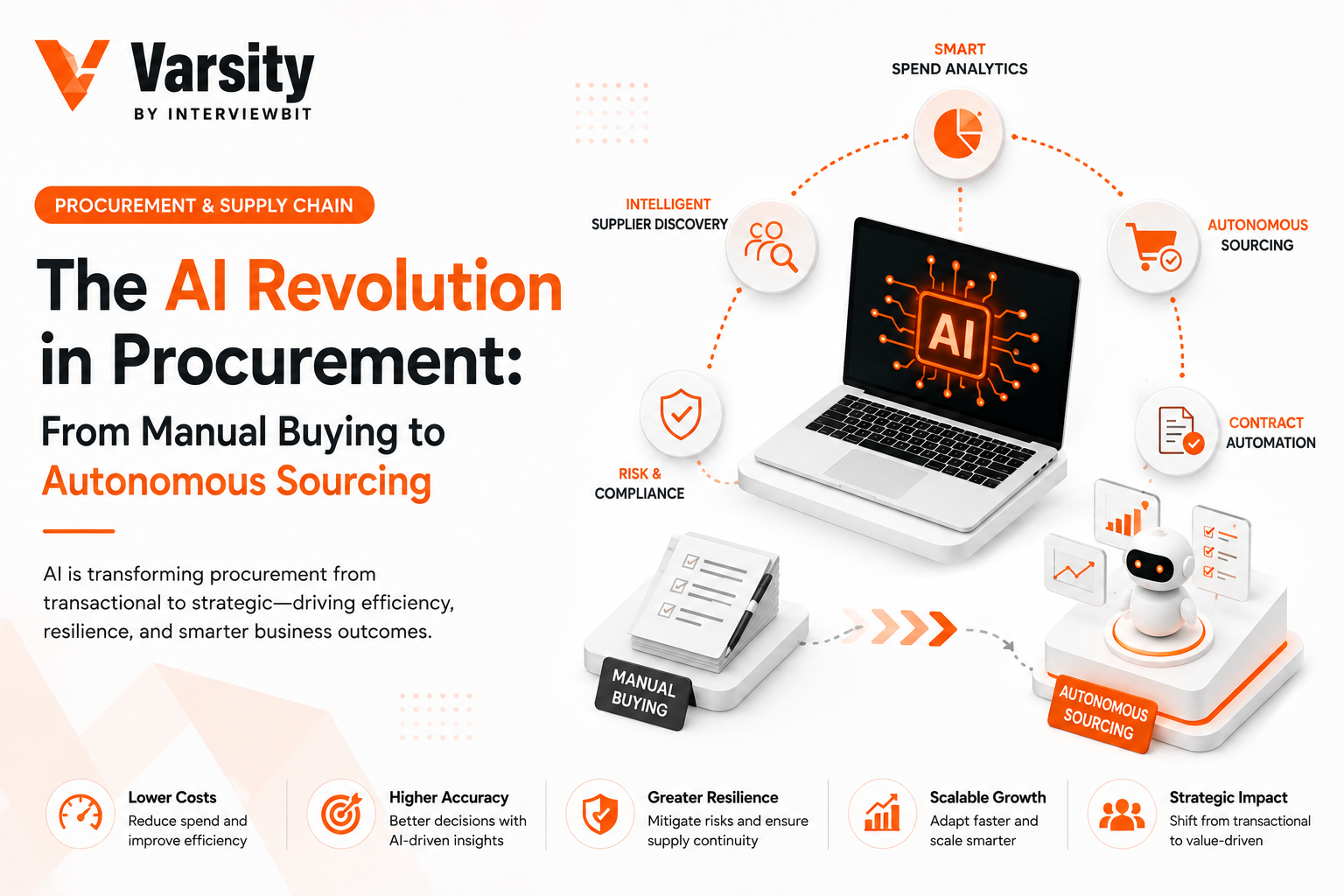
Ask anyone who’s worked in a procurement team what their job actually looks like day to day, and you’ll usually get a tired laugh before the answer. Chasing three quotes over email. Copy-pasting numbers into a comparison sheet. Waiting four days for a supplier to reply to a simple pricing question. It’s not glamorous work, and for decades, nobody expected it to be.
That’s changing faster than most functions in a company right now, and it’s worth understanding both the definition and the direction, because “procurement” is one of those words people use constantly without ever quite pinning down.
This piece covers what procurement actually means, how the process traditionally works, why it’s been stubbornly manual for so long, and what’s genuinely different about the shift toward AI-powered and autonomous sourcing, as opposed to just another software upgrade with a shinier dashboard.
What is the Meaning of Procurement?
Procurement is the end-to-end process a business follows to acquire the goods and services it needs to run, everything from identifying that a need exists, to finding and evaluating suppliers, negotiating terms, placing the order, and paying the resulting invoice. It’s a full cycle, not a single transaction, and that’s the detail most casual definitions skip. The Chartered Institute of Procurement & Supply (CIPS), the profession’s own governing body, frames it the same way, as a structured, multi-step process rather than just “buying stuff.”
Here’s the distinction that trips people up constantly, including a fair number of people who work in the field: procurement and purchasing are not the same thing. Purchasing is the actual transaction, the moment money changes hands. Procurement is everything around it, the strategy, the supplier relationship, the risk management, the sourcing decisions that determine whether that transaction was even a good idea in the first place. Purchasing is a sentence. Procurement is the whole paragraph.
Worth noting too, since it comes up a lot: in a company, procurement isn’t only about raw materials or manufacturing inputs. It covers software licenses, office supplies, consulting contracts, marketing services, basically anything the business spends money on to keep operating, which is exactly why it touches nearly every department.
The Procurement Process, Step by Step
The exact sequence varies a bit by company and industry, but most procurement cycles boil down to a version of this:
| Step | What happens |
| Identify the need | A team flags that it needs something, new laptops, a logistics vendor, a batch of raw material |
| Raise a requisition | The need gets formally documented and submitted for internal approval |
| Source and evaluate suppliers | Procurement researches vendors, checks pricing, reliability, and compliance history |
| Negotiate and contract | Terms, pricing, delivery timelines and SLAs get locked in, ideally in writing |
| Issue the purchase order | A formal PO goes out, the official “yes, go ahead” to the supplier |
| Receive and verify | Goods or services arrive, and someone checks they match what was actually ordered |
| Process the invoice and pay | Finance matches the invoice against the PO and receipt before releasing payment |
| Review supplier performance | The step everyone skips when busy, and the one that quietly determines next year’s sourcing decisions |
On paper this reads like a tidy eight-step checklist. In practice it’s eight steps where at least four involve someone waiting on an email reply, chasing an approval that’s stuck in someone’s inbox, or manually re-typing numbers from one spreadsheet into another. That gap between the process on paper and the process in real life is basically the entire reason this article exists.
Why Procurement Has Stayed So Manual for So Long?
A few honest reasons, not excuses, this is just how it’s genuinely gone for most companies:
- Every purchase is a little bit different. A software renewal and a bulk raw-material order don’t follow the same logic, which made blanket automation genuinely hard to build well.
- Negotiation has always felt like a human skill, and for high-value or strategic contracts, it still very much is.
- Procurement software historically digitised the paperwork without touching the actual decision-making, so you got faster forms and the same slow judgement calls underneath.
- Nobody wanted to be the person who let a badly negotiated, badly vetted contract slip through on autopilot. Caution here has genuinely been rational, not just organisational inertia.
So for a long time, “procurement technology” mostly meant digitising forms and building a dashboard on top of spreadsheet chaos. Useful, sure. Revolutionary, not really.
Where AI Actually Entered Procurement
It helps to see this as three distinct waves rather than one sudden leap, because the current moment only makes sense against what came before it.
| Wave | Roughly when | What it actually did |
| E-procurement software | 2000s onward | Digitised requisitions, POs and approvals. Faster paperwork, same human decisions |
| Predictive analytics and spend visibility | 2010s | Surfaced patterns in spend data, flagged savings opportunities, still needed a person to act on the insight |
| Agentic AI and autonomous sourcing | Now | Software that doesn’t just show you the insight, it acts on it, drafting RFQs, shortlisting suppliers, even negotiating within limits you’ve set |
That third row is the genuinely new part, and it’s worth being precise about what “agentic” means here rather than treating it as a buzzword. It’s the difference between software that tells a procurement analyst “this supplier looks 12% more expensive than the market average” and software that goes and requests a revised quote itself, compares it against pre-approved thresholds, and only pings a human when the numbers fall outside what it’s been authorised to handle alone.
What Autonomous Sourcing Actually Looks Like?
Strip away the marketing language and autonomous sourcing tends to break down into a handful of concrete jobs an AI agent can now genuinely do without someone babysitting every step:
- Reading an incoming requisition and drafting a proper RFQ from it, instead of a procurement analyst starting from a blank template every single time.
- Scanning a supplier database (and sometimes the open market) to shortlist vendors that meet a spec, on price, location, certifications, past performance.
- Running first-pass negotiation on standard terms, inside pre-approved ranges, freeing human negotiators for the contracts that actually need a human touch.
- Matching invoices against purchase orders and receipts automatically, catching mismatches before they turn into a finance headache three weeks later.
- Flagging supplier risk in near real time, a delayed shipment pattern, a compliance certificate about to expire, instead of someone discovering it during an annual review.
None of this is science fiction anymore. It’s closer to what a competent junior procurement analyst does on a normal Tuesday, except it happens in minutes and doesn’t need coffee breaks.
The Real Stats Behind the Hype
Worth grounding this in actual research rather than vibes, because procurement has genuinely become one of Gartner’s headline use cases for agentic AI. Gartner forecasts that 40% of procurement teams will have implemented at least one AI agent by 2028, and that 60% of enterprises running supply chain management software will have adopted agentic capabilities by 2030. That’s a genuinely fast curve for a function that’s historically moved at the speed of a signed PDF.
But here’s the sobering counterweight, and it matters just as much as the exciting number: across enterprise AI more broadly, fewer than a quarter of organisations have a mature governance model for autonomous agents. Translation, plenty of companies are switching agentic tools on faster than they’re building the guardrails to actually trust them. Procurement, with real money and real contracts on the line, is not the function where you want to be the company that skipped that part.
Where Humans Still Firmly Matter?
Autonomous doesn’t mean unsupervised, and it definitely doesn’t mean unaccountable. A few things that stay squarely in human hands, for good reason:
- Strategic supplier relationships. An AI agent can compare quotes all day, but it can’t read the room in a renewal conversation with a vendor you’ve worked with for eight years.
- Ethical and sustainability sourcing calls. These involve judgement about trade-offs, cost versus labour practices versus environmental impact, that shouldn’t be quietly delegated to an algorithm optimising for lowest price.
- High-value, high-risk contracts. The bigger the number, the more a human needs to be the one signing off, full stop.
- Anything genuinely novel. Agents are excellent at repeatable, well-defined tasks. The moment a situation doesn’t match anything in its training or its rules, a human needs to be in the loop, not guessing on your behalf.
Risks and Guardrails Worth Taking Seriously
A short, honest list of what actually goes wrong when this gets rushed:
- An agent negotiating on outdated or incomplete supplier data ends up locking in a bad deal confidently, and confidence isn’t the same thing as correctness.
- Loose spend thresholds mean an agent can commit real money before anyone notices the pattern, which is a very different failure mode from a slow manual process.
- Vendor fraud and shell-supplier schemes get harder to catch if the verification step itself has been automated without a genuine human spot-check layered on top.
- Compliance and audit trails need to be airtight. “The agent decided” is not an answer that satisfies a regulator, a board, or honestly, your own finance team.
How to Prepare a Procurement Function for This Shift
- Clean up your spend and supplier data first. An agent making decisions on messy, duplicated vendor records will just make messy decisions faster.
- Define clear autonomy thresholds. Decide explicitly what an agent can approve on its own and what always needs a human sign-off, in rupees or dollars, not vague language like “use judgement.”
- Start with a narrow, low-risk use case. Invoice matching or RFQ drafting is a far safer first pilot than autonomous contract negotiation on a seven-figure supplier relationship.
- Build the governance layer alongside the tooling, not after. Given how few organisations currently have this mature, getting it right early is a genuine competitive edge, not just a compliance chore.
- Keep a human review cadence even after automation proves reliable. Trust gets built over months of consistent results, not switched on the day the pilot goes live.
This is essentially the same discipline behind any solid business analytics process, define the question, gather clean inputs, model it, validate against reality, then decide. Procurement teams doing this well right now are treating agentic AI the same way a good analyst treats any new tool, genuinely useful, not automatically trustworthy just because it’s new.
What is the meaning of procurement?
Procurement is the full process a business uses to acquire the goods and services it needs, covering everything from identifying a need through sourcing, negotiating, purchasing and paying the final invoice. It’s a complete cycle, not a single transaction.
What is the difference between procurement and purchasing?
Purchasing is the actual transaction, placing the order and paying for it. Procurement is the broader strategic process around that transaction, supplier evaluation, negotiation, risk management and long-term vendor relationships.
What are the main steps in the procurement process?
Identifying a need, raising a requisition, sourcing and evaluating suppliers, negotiating and contracting, issuing a purchase order, receiving and verifying goods, processing the invoice, and reviewing supplier performance afterward.
What is autonomous sourcing?
Autonomous sourcing refers to AI agents independently handling parts of the procurement cycle, drafting RFQs, shortlisting suppliers, running first-pass negotiations within set limits, without needing a human to manually execute each step.
Will AI replace procurement teams?
Unlikely in the way that headline implies. AI is taking over the repetitive, well-defined parts of the job, quote comparison, invoice matching, basic supplier screening, which frees procurement professionals for negotiation, strategy and relationship management, the parts that actually needed a human in the first place.
Is agentic AI safe to use for procurement decisions?
It can be, with the right guardrails: clear spend thresholds, clean underlying data, and a genuine human review layer for anything high-value or unusual. Without those, it’s a fast way to make expensive mistakes rather than a shortcut around them.
Conclusion
Procurement spent a couple of decades being the function everyone agreed was important and nobody particularly wanted to modernise properly. That’s over now, not because a new dashboard arrived, but because the software finally moved from showing people information to actually acting on it.
The teams getting real value out of this aren’t the ones chasing the most autonomous tool on the market. They’re the ones being deliberate about where autonomy actually helps and where a human still needs to be the one holding the pen, which, if you think about it, is a very procurement way of approaching a new vendor in the first place.
If you’re the one expected to design and run these AI-powered operations rather than just read about them, Scaler’s online PGP in Business & AI is built around exactly this kind of work, translating messy real-world functions like procurement into systems and decisions that actually hold up, with mentors who’ve done it for a living.