Procurement Jobs, Salary and Career Path

Key Insights
- Role: Procurement covers the buying cycle, from sourcing and supplier evaluation to negotiation, performance management and spend analysis.
- Career path: Progression typically moves from Trainee/Executive to Specialist, Category or Procurement Manager, and eventually Head of Procurement or CPO.
- Entry-level salary: In India, average annual total pay ranges from ₹2.40 lakh for Procurement Officers to ₹2.94 lakh for Procurement Specialists with under one year of experience.
- Mid-level salary: Procurement Specialists and Buyers earn around ₹6.2–6.3 lakh annually in base salary.
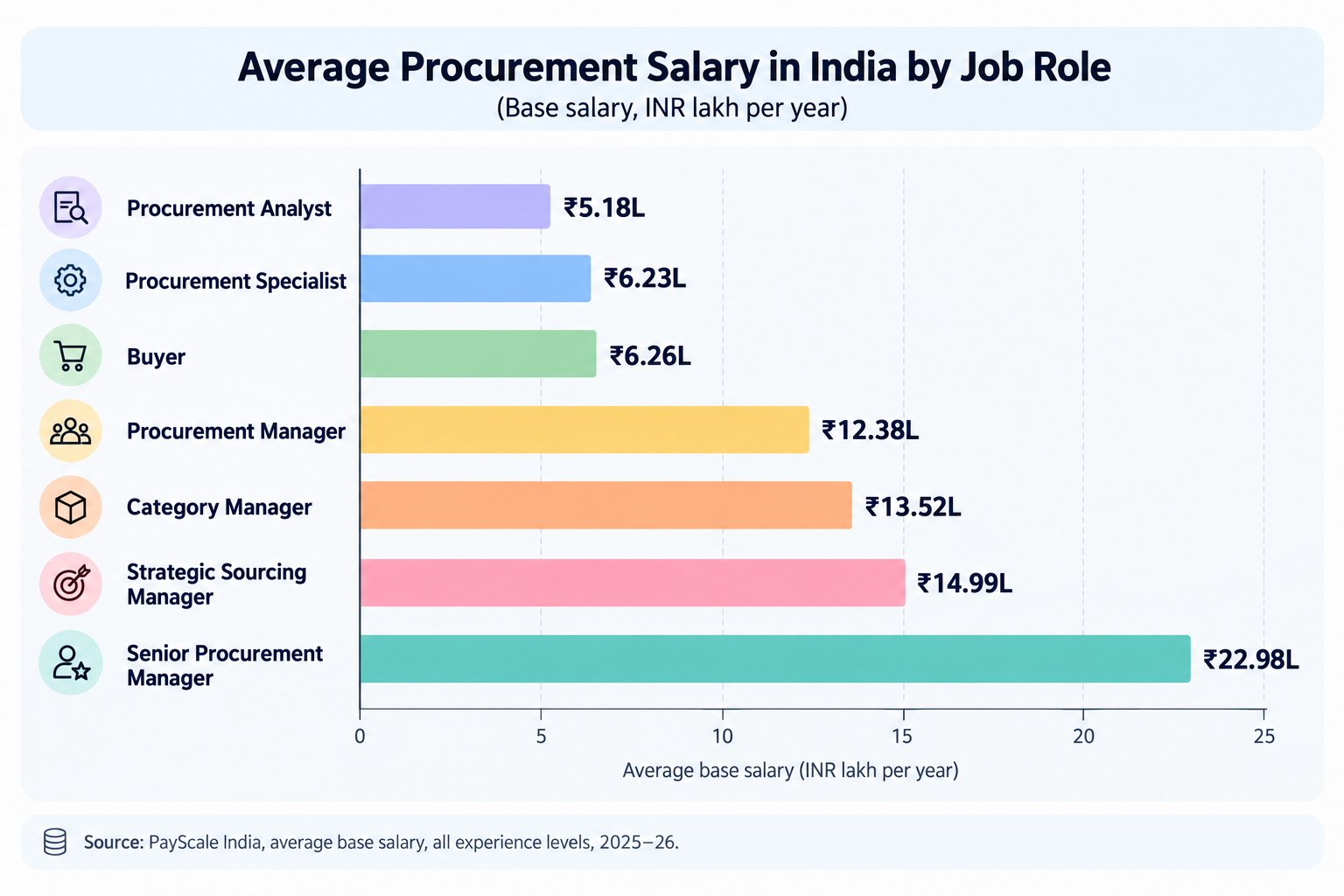
- Senior salary: Average annual base salaries are ₹12.38 lakh for Procurement Managers, ₹14.99 lakh for Strategic Sourcing Managers and ₹22.98 lakh for Senior Procurement Managers.
- Pay drivers: A Senior Procurement Manager earns over four times a Procurement Analyst’s average base salary (₹22.98 lakh vs ₹5.18 lakh), reflecting greater responsibility and leadership.
- Qualifications: Relevant degrees include business, supply chain, operations, finance, engineering and economics. Recognised certifications include CIPS (Levels 2–6, leading to MCIPS) and ISM’s CPSM, which has experience and exam requirements. Neither guarantees higher pay.
- Getting started: Freshers can begin through internships, trainee, purchasing assistant or analyst roles. Excel, spend analysis and ERP tools such as SAP MM strengthen applications.
- Industries: Manufacturing, retail, IT, healthcare and government hire procurement professionals. Under Rule 149 of the GFR 2017, central ministries must procure goods and services listed on GeM through the platform.
Procurement is the process of sourcing and acquiring the goods and services an organization needs to operate. Procurement jobs are the roles that run this process, from finding suppliers to negotiating contracts and managing purchases. Procurement salary is the pay for these roles, and it varies with experience, role, industry, location, skills and employer.
- Core work: sourcing suppliers, evaluating vendors, negotiating contracts and securing the right cost and quality.
- Career range: from entry-level purchasing to strategic sourcing, category management and procurement leadership.
- Pay drivers: responsibility, such as owning a spend category or leading a team, not just years worked.
- Entry routes: no single required degree; business, engineering, finance and supply chain graduates all qualify.
This guide covers procurement jobs, salary ranges, common roles, required skills, qualifications and the typical procurement career path, starting with how careers progress.
What Is the Procurement Career Path?
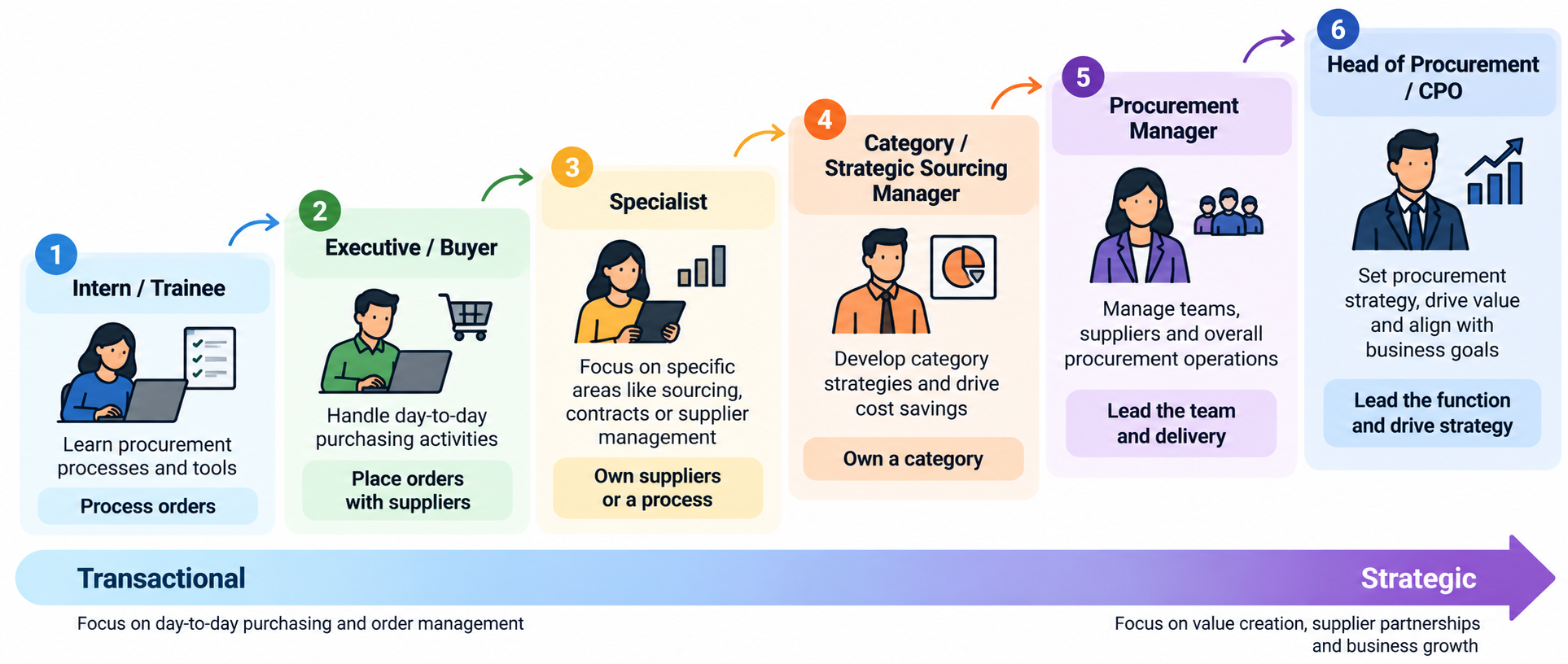
The procurement career path runs from processing purchases to setting procurement strategy for a whole organization. Titles vary by company, but the typical progression is:
Procurement Intern/Trainee → Procurement Executive/Buyer → Procurement Specialist → Category Manager/Strategic Sourcing Manager → Procurement Manager → Head of Procurement/Chief Procurement Officer
Entry-Level Procurement Roles
Procurement Interns, Trainees, Purchasing Assistants, Junior Procurement Executives and Procurement Analysts learn how purchasing works by supporting experienced buyers. Typical tasks include:
- Purchase order processing
- Supplier research
- Data entry and documentation
- Basic spend analysis
- Supporting procurement teams
Mid-Level Procurement Roles
Procurement Specialists, Buyers, Senior Buyers, Sourcing Specialists and Category Specialists move from processing orders to owning suppliers and purchases. Their work covers:
- Supplier negotiations and vendor management
- Strategic sourcing and contract support
- Spend analysis and procurement planning
Senior Procurement and Management Roles
Category Managers, Procurement Managers, Strategic Sourcing Managers and Senior Procurement Managers are accountable for a spend category or a whole team. They focus on:
- Managing procurement teams and business stakeholders
- Category strategy and supplier relationships
- Cost optimization and procurement performance
Procurement Leadership Roles
Heads of Procurement, Procurement Directors and Chief Procurement Officers (CPOs) set procurement direction for the whole organization. Their remit includes:
- Organization-wide procurement strategy and governance
- Supplier risk and large-scale negotiations
- Procurement transformation and team leadership
Across these levels, work shifts from transactional purchasing and execution toward strategic sourcing, category ownership and organizational leadership.
What Are the Different Types of Procurement Jobs?
Procurement is not a single job. It spans purchasing, sourcing, category management, supplier management, analytics and leadership, and many professionals specialize in one before moving up.
Purchasing and Buyer Roles
Buyers run day-to-day purchasing. They raise and track purchase orders, communicate with suppliers on prices, quantities and delivery dates, and resolve issues such as late or incorrect shipments.
Strategic Sourcing Roles
Sourcing professionals decide where to buy before purchasing begins. They identify suppliers, evaluate alternatives on cost, quality and risk, and negotiate commercial terms for long-term agreements.
Category Management Roles
Category managers own one spend category, meaning a group of related purchases such as IT hardware or packaging. They study its supplier market and internal demand, then build long-term sourcing strategies.
Supplier and Vendor Management Roles
These roles focus on what happens after a contract is signed, making sure key suppliers keep delivering value. Core responsibilities are:
- Supplier performance
- Relationship management
- Contract compliance
- Supplier risk
Procurement Analytics Roles
Procurement analysts turn purchasing data into decisions, spotting patterns that buyers cannot see from individual orders. They analyze:
- Spending by category and supplier
- Supplier performance
- Savings opportunities
- Procurement trends
What Is the Salary for Procurement Jobs?
Procurement salary in India rises as roles move from processing purchases to owning spend, suppliers and teams. The figures below are self-reported PayScale India averages in Indian rupees (INR) per year, so treat them as estimates.
Entry-Level Procurement Salary
Entry-level pay depends mainly on the employer, the city and how analytical the role is. These average total pay figures are each based on 9 to 40 salary reports:
| Role | Experience | Average total pay (INR/yr) |
|---|---|---|
| Procurement Officer | Under 1 year | ₹2.40 lakh |
| Procurement Analyst | Under 1 year | ₹2.79 lakh |
| Procurement Specialist | Under 1 year | ₹2.94 lakh |
| Buyer | 1–4 years | ₹5.06 lakh |
PayScale has no separate India data for procurement executives, interns or trainees; Procurement Officer is its closest junior title.
Mid-Level Procurement Salary
Mid-level pay varies widely because the same title can mean routine buying in one company and full sourcing ownership in another. Averages across all reported experience levels:
| Role | Average base salary (INR/yr) | Data basis |
|---|---|---|
| Procurement Specialist | ₹6.23 lakh | 136 profiles, May 2026 |
| Buyer | ₹6.26 lakh | 71 profiles, Feb 2026 |
PayScale lists no separate India averages for sourcing or category specialists, so these are the nearest benchmarks. Buyers’ average total pay rises from ₹5.06 lakh at 1–4 years to ₹6.51 lakh at 5–9 years.
Senior Procurement Salary
Senior pay reflects accountability for large budgets, supplier strategy and teams. Average base salaries across all reported experience levels:
| Role | Average base salary (INR/yr) | Data basis |
|---|---|---|
| Procurement Manager | ₹12.38 lakh | 200 profiles, May 2026 |
| Category Manager | ₹13.52 lakh | 77 profiles, July 2025 |
| Strategic Sourcing Manager | ₹14.99 lakh | 30 profiles, July 2026 |
| Senior Procurement Manager | ₹22.98 lakh | 32 profiles, June 2026 |
The category manager figure also includes retail and e-commerce category roles, so read it as a broad indicator.
What Factors Affect Procurement Salary?
Two people with the same title can earn very different amounts. These are the main reasons:
- Years of experience: pay rises over time, but the biggest jumps come with promotions.
- Job title: a senior procurement manager averages about four times a procurement analyst’s base pay.
- Industry: complex or high-value spend needs specialist buyers.
- Location: pay differs by city.
- Company size: bigger budgets often mean broader roles.
- Procurement specialization: sourcing, category and analytics roles carry more commercial weight.
- Negotiation and analytical skills: these unlock higher-value work.
- Professional certifications: CIPS or CPSM can help, but guarantee nothing.
In short, procurement salary grows with role complexity, category ownership, strategic responsibility and leadership scope, not just years of experience.
What Skills Are Needed for Procurement Jobs?
Employers hiring for procurement jobs look for a blend of commercial, analytical and relationship skills. The balance shifts with seniority, but these five areas matter across most roles.
Negotiation and Communication Skills
Procurement professionals negotiate price and terms with suppliers while keeping internal stakeholders aligned. The best push for value without damaging supplier relationships, and explain their decisions clearly to finance and operations.
Analytical and Financial Skills
Procurement decisions rest on numbers, so employers test how comfortable candidates are with data. Core skills include:
- Cost analysis
- Spend analysis
- Budgeting
- Total cost of ownership (the full lifetime cost, not just the purchase price)
- Data interpretation
Supplier and Relationship Management
Strong professionals judge suppliers on capability, quality and reliability, not price alone. They manage relationships actively and act early when delivery, quality or service starts to slip.
Technology and Procurement Software Skills
Most procurement work now runs through digital tools, and job descriptions often name them. Useful familiarity includes:
- Excel
- ERP systems such as SAP or Oracle
- Procurement platforms such as SAP Ariba or Coupa
- Spend analytics tools
- E-procurement systems
Problem-Solving and Risk Management
Procurement teams are expected to keep supply running when plans break. Typical challenges include supply disruptions, supplier risks, cost increases, quality issues and changing business requirements, each needing a quick, well-documented response.
What Qualifications Do You Need for a Procurement Career?
There is no single route into procurement. Employers usually want a relevant degree and practical exposure, while some senior roles also value a professional certification.
Educational Background
Procurement teams hire graduates from many disciplines, since each brings a useful lens to buying decisions. Common backgrounds include business, supply chain management, operations, finance, engineering and economics.
Certifications for Procurement Professionals
Certifications show structured procurement knowledge, but they complement experience rather than replace it. The two most widely cited options compare as follows:
| Certification | Awarding body | Eligibility in brief |
|---|---|---|
| CIPS qualifications (Levels 2–6) | Chartered Institute of Procurement & Supply | Level 2 suits newcomers; Level 4 suits those with 2+ years of business experience. Completing Levels 4–6 lets you apply for MCIPS. |
| CPSM (Certified Professional in Supply Management) | Institute for Supply Management (ISM) | 3 years of full-time supply management experience with a bachelor’s degree, or 5 years without; pass 3 exams. |
Other credentials, such as ASCM’s Certified Supply Chain Professional (CSCP), cover sourcing within a broader supply chain syllabus.
Can Freshers Get Procurement Jobs?
Yes. Many employers hire freshers into support or analyst roles, where they learn the process before handling negotiations. Common entry points are:
- Internships
- Graduate programs
- Procurement trainee roles
- Purchasing assistant roles
- Procurement analyst positions
How Experience Helps Career Progression
Promotions usually follow proof that you can handle bigger commercial decisions. Experience in supplier negotiations, strategic sourcing, category management, contract management and procurement analytics, ideally with quantified savings, opens the next level.
What Does a Procurement Professional Do Every Day?
Procurement is more than “buying things.” Modern procurement combines commercial decision-making, supplier management, data analysis and business strategy, and a typical week touches all four.
Identifying Business Requirements
Every purchase starts with understanding what the business needs. Procurement confirms the specification, quantity, budget and deadline with the requesting team, and sometimes questions whether the purchase is needed at all.
Finding and Evaluating Suppliers
Once the need is clear, procurement looks for suppliers who can meet it. This stage involves:
- Supplier research
- RFQs (requests for quotation) and RFPs (requests for proposal)
- Supplier comparison
- Capability and quality assessment
Negotiating and Purchasing
With a shortlist ready, procurement negotiates terms and places the order. Key points include price, delivery terms, quality requirements, payment terms and contract conditions such as liability and renewal.
Managing Supplier Performance
After the purchase, procurement checks that suppliers deliver what they promised. Regular reviews track delivery performance, quality, cost, contract compliance and any supplier issues that need escalation.
Analyzing Procurement Data
Procurement data shows where money goes and where savings are possible. Professionals track spend, savings delivered, supplier performance and purchase patterns that reveal chances to consolidate orders.
What Industries Hire Procurement Professionals?
Almost every sector that spends at scale hires procurement professionals, but what they buy and how they buy it differs. Here is what procurement covers in five major industries.
Manufacturing and Automotive
Procurement keeps production lines supplied with raw materials, components, machinery and industrial services such as maintenance and testing. A late or faulty part can halt production, so supplier reliability matters as much as price.
Retail and E-Commerce
Retail procurement covers both what the company sells and what it needs to operate: products, packaging, logistics services, and the technology and business services that run stores and websites.
Technology and IT
IT procurement buys software, hardware, cloud services and professional services such as consulting or outsourced development. License terms, renewals and data security clauses are a large part of negotiations.
Healthcare and Pharmaceuticals
Healthcare procurement balances cost against patient safety and regulatory compliance. Teams buy medical supplies, equipment, pharmaceuticals and operational services such as cleaning and catering.
Government and Public Sector
Public procurement follows formal rules on transparency and competition, so professionals run tenders and document decisions for audit. In India, central ministries and departments must buy goods and services available on the Government e-Marketplace (GeM) through that platform, under Rule 149 of the General Financial Rules, 2017.
How Can You Start a Career in Procurement?
Start by learning the basics, build tool skills, gain hands-on experience, then move toward strategic work. A strong procurement career combines commercial skills, analytical ability, supplier management and business understanding.
Build Procurement Fundamentals
Learn how purchasing works inside a business before you apply. Focus on procurement processes, sourcing, purchasing, supplier management and basic supply chain concepts such as lead time and inventory.
Develop Relevant Technical Skills
Technical skills help a fresher’s application stand out, because they show you can contribute quickly. Prioritize:
- Excel, especially pivot tables and lookups
- Data analysis
- ERP/procurement software such as SAP MM
- Basic financial analysis
Gain Practical Experience
Employers value evidence of real purchasing work, even at a small scale. Build it through internships, procurement projects, supply chain roles, purchasing for a small business, or entry-level procurement positions.
Move From Execution to Strategy
Long-term growth comes from moving beyond transactional purchasing toward decisions that shape spend:
Sourcing → Category Management → Supplier Strategy → Procurement Leadership
Each step adds ownership, from supplier selection to a full category, then the supplier base and finally the procurement function.
Build the Skills to Transform Business Operations
Explore how AI can streamline business processes, support data-driven decisions, and improve operational efficiency with the
Certificate Programme in AI-Powered Operations & Process Transformation by IIM Tiruchirappalli.
Discover the programme and take the next step towards smarter, technology-driven operations.
Frequently Asked Questions
Is procurement a good career for fresh graduates?
It can be, particularly if you enjoy numbers, negotiation and working across teams. The skills transfer across industries, though starting pay is modest and growth depends on moving into sourcing or category roles.
What is the highest-paying career path in procurement?
Leadership roles that have large spend, such as procurement director or CPO, pay the most. No path guarantees it, but routes through strategic sourcing or category management commonly lead there.
How can I get a procurement job with no experience?
Apply for purchasing assistant, trainee or analyst roles. Strengthen your application with Excel skills, an introductory course such as CIPS Level 2, and a project analyzing real purchase data.
Which procurement roles have the best career growth?
Strategic sourcing and category management usually offer the clearest growth, because they build the commercial judgment that manager and head-of-procurement roles require.
How long does it take to become a procurement manager?
There is no fixed timeline. It depends on the company, the sector and how quickly you take on sourcing responsibility, and the seniority behind the title varies between small and large employers.
Can procurement professionals move into supply chain management?
Yes. Procurement is part of the wider supply chain, so negotiation, supplier management and cost analysis transfer directly. Planning, inventory and logistics knowledge may need building.
Is procurement a good career option after an MBA?
It can be, especially with an operations, supply chain or finance specialization suited to strategic sourcing, category management or procurement consulting. Internships showing hands-on procurement work add to the degree’s value.
Which industries offer the best procurement career opportunities?
No single industry is best for everyone. Sectors with large, complex spend, such as manufacturing, automotive, IT and pharmaceuticals, tend to offer the widest range of procurement roles.
What is the difference between procurement and purchasing careers?
Purchasing is the transactional part: raising orders, tracking deliveries and processing invoices. Procurement is broader, adding sourcing strategy, supplier selection, contract negotiation and supplier management.
How can I increase my salary in a procurement career?
Take on responsibility the market pays for, such as owning a category, leading sourcing projects or managing people. Quantified savings and stronger data skills also strengthen salary negotiations.
What procurement skills should I learn to get hired faster?
Start with Excel and spend analysis, then add working knowledge of an ERP system such as SAP MM and a clear grasp of RFQs and purchase orders.
Can a procurement career lead to senior business or leadership roles?
Yes. Senior procurement leaders work closely with finance, operations and the executive team, and the commercial judgment procurement builds carries into operations and general management roles.
Sources
- Procurement Officer, Procurement Analyst, Procurement Specialist, Buyer, Procurement Manager, Category Manager, Strategic Sourcing Manager, Senior Procurement Manager
- Procurement Qualifications, Level 2 Certificate in Procurement and Supply Operations
- Get Started on Your CPSM Journey
- CSCP certification
- Information Systems Audit of Government e-Marketplace